The United States are just three days away from kicking off their 2026 FIFA World Cup campaign.
Heading into the tournament, head coach Mauricio Pochettino's tactics have split opinions. Some say it's a back three, some say it's a back four, but the reality is that it's both. Our Ben Wright went in-depth on the intricacies of the system for our friends at Backheeled.
 Ben Wright
The reality of the system is that the United States build in a three-man backline, which generally looks like some version of a 3-2-5 (or 3-2-2-3). Out of possession, they generally set up in a 4-4-2, although they do have the flexibility to drop one of the wingers back to match the shape of their opponent.
It should look pretty similar to how it has recently – 3-2-5 (or 3-4-2-1) in buildup, 4-4-2 in set defense.
— Ben Wright (@benwright.bsky.social) June 6, 2026 at 1:08 PM
[image or embed]
If you find yourself with a bad case of World Cup fever, with an unshakeable urge to play out the tournament yourself, we've got you covered. Here's how to set up your virtual United States team in EA Sports' FC 26 video game to get the same tactical setup you'll see on the actual pitch this summer.
4-4-1-1 formation
For starters, select a the "4-4-1-1 midfield" formation. In our team, we used what we think will be the lineup the USA will use at the tournament: Antonee Robinson and Alex Freeman at left and right back, Tim Ream and Chris Richards at center back, Tyler Adams and Weston McKennie in central midfield, Christian Pulisic and Sergiño Dest on the wings, Folarin Balogun up front, and Malik Tillman underneath the striker.
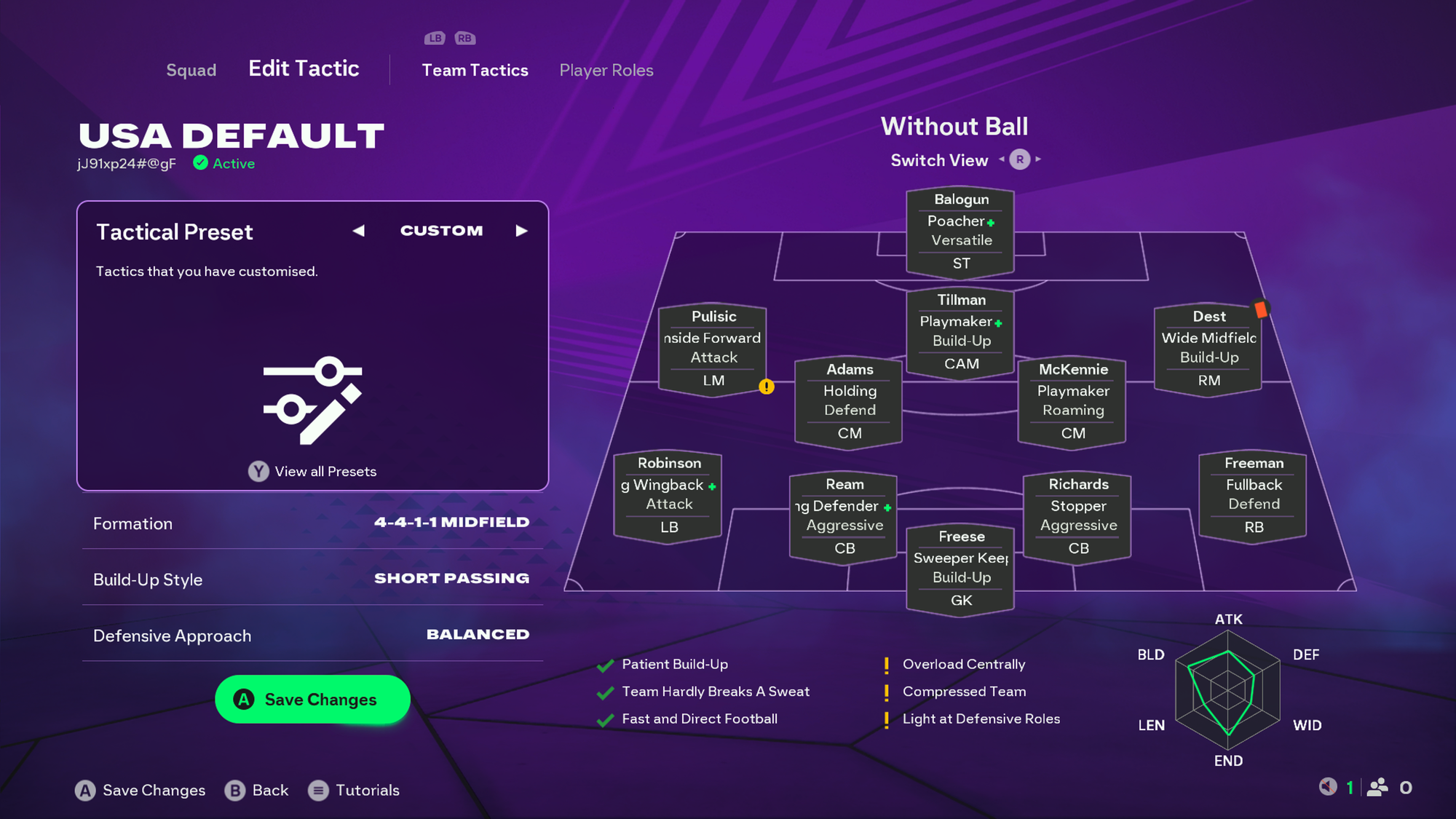
The individual player roles make or break this system. Alex Freeman's role should be fullback, with his focus set to defend. This will have him stay back in possession and play more as a right center back, forming that three-man backline in buildup.
There's flexibility with the other two center backs' roles. We gave Chris Richards a stopper role, having him be more aggressive to step into midfield and win possession. Tim Ream gets a ball-playing defender role, which puts emphasis on his ability to break lines and play forward.
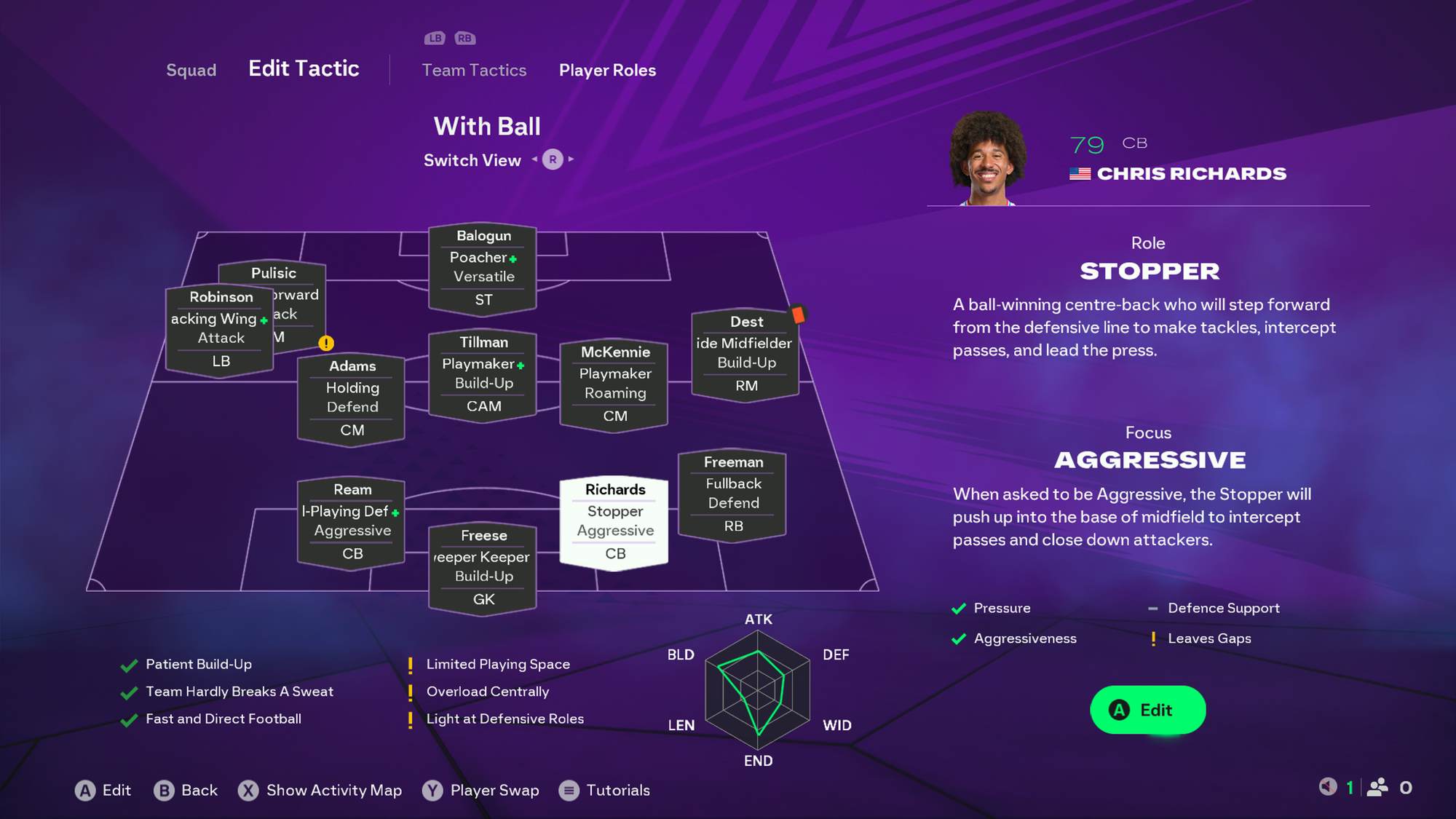
On the left, Antonee Robinson playing in an attacking wingback role, and gets an attacking focus as well. This lets him bomb forward and overlap, while also tracking back to play as a left back against the ball. Christian Pulisic can be set to an inside forward role, allowing him to cut inside and play closer to the striker.
On the opposite flank, the Sergiño Dest plays as a wide midfielder and focuses on buildup. He'll still push forward, but won't leave Freeman fully isolated, either.
Our midfield ends up being fluid. Tyler Adams is given a holding role, and while his focus can vary, having him primarily defend helps the rest defense. It also allows Weston McKennie to play with a playmaker focus. Having his focus set to roaming allows him to interchange with Malik Tillman, who also plays with a playmaker focus from an attacking midfield position, but with his buildup focus, will occasionally drop into midfield and let McKennie be the more advanced midfielder.
On the pitch
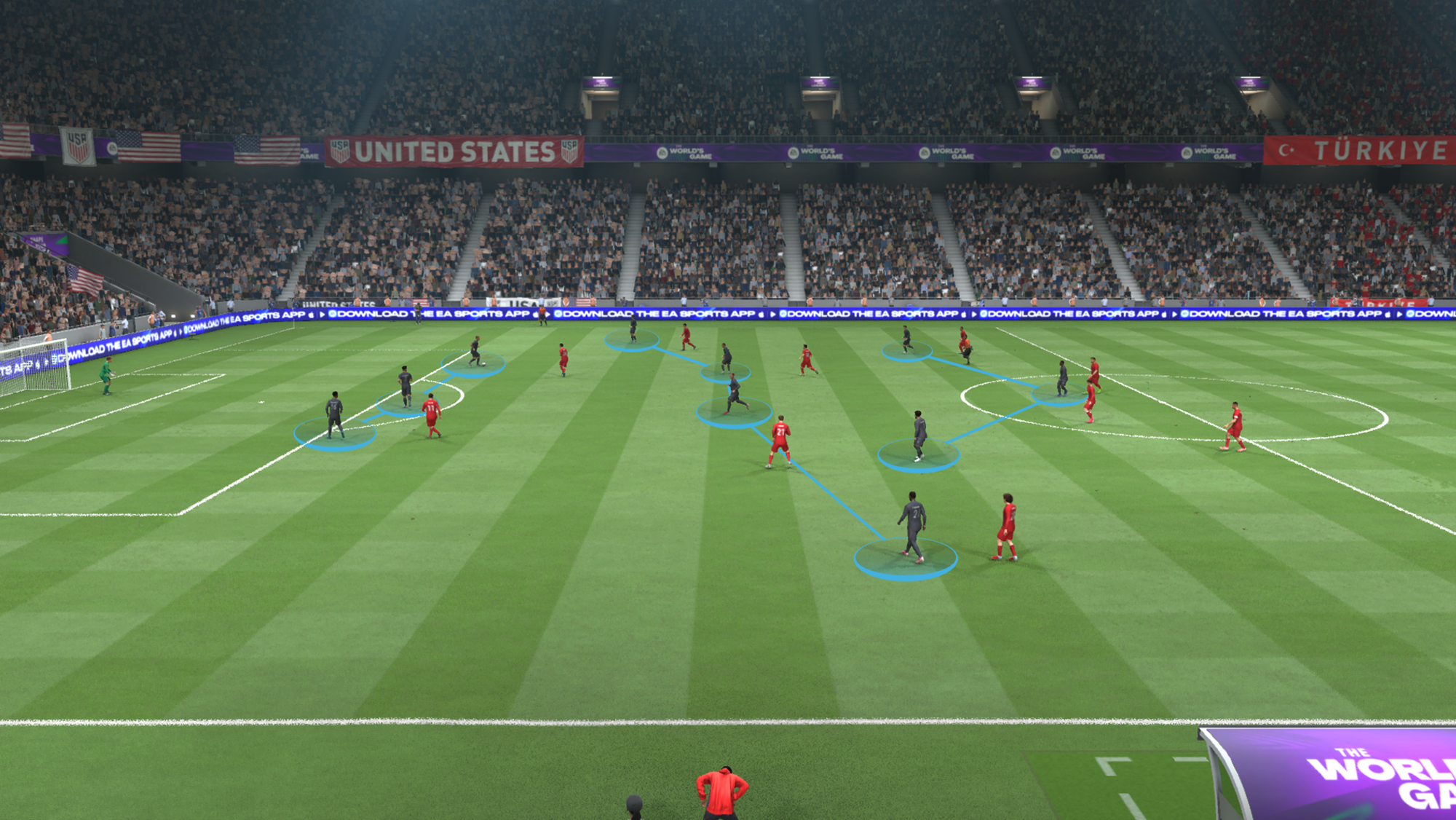
Out of possession, the result is a pretty standard 4-4-1-1 formation, with the attacking midfielder pushing forward at times to form a 4-4-2.
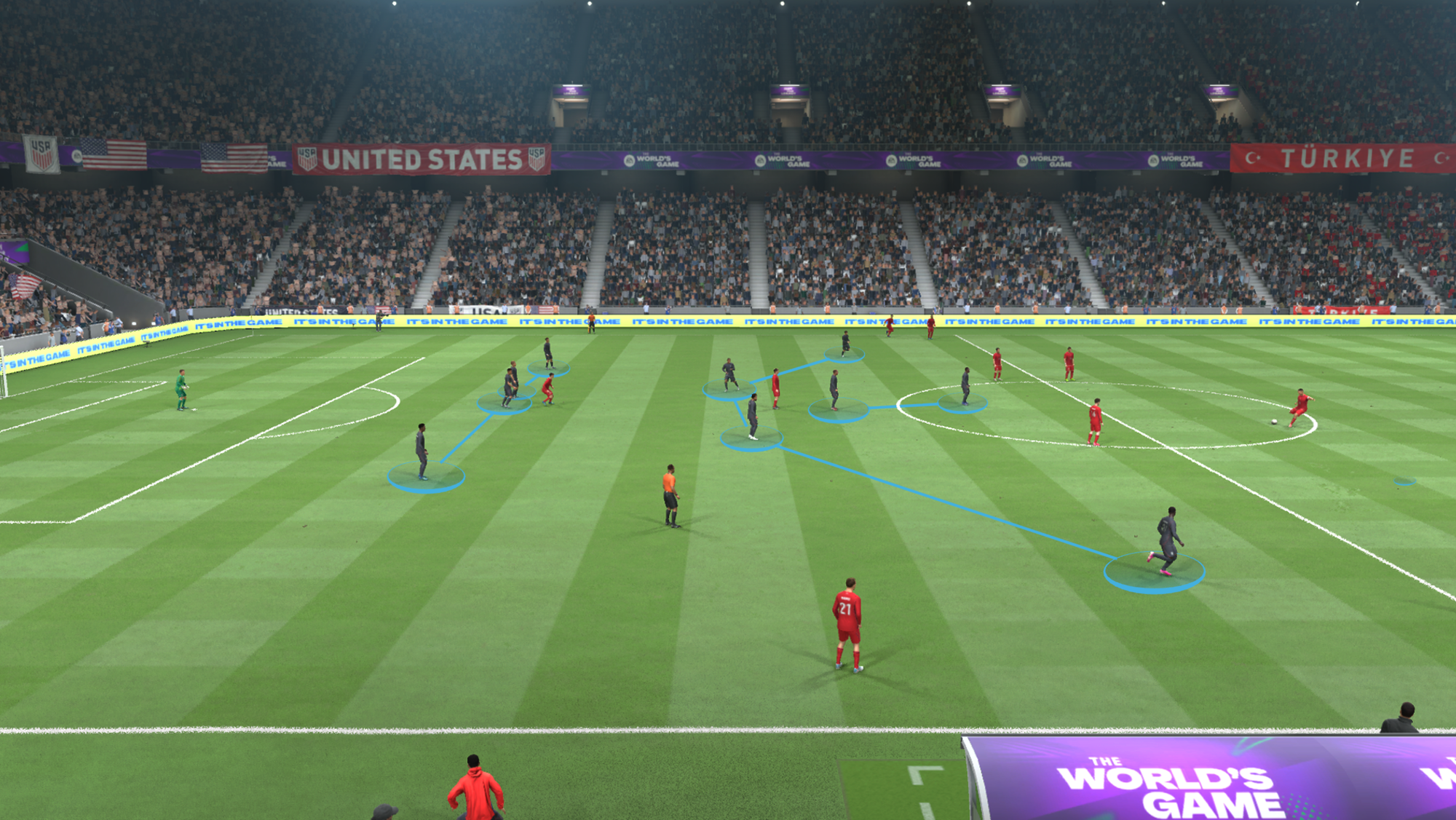
Out of possession, the right back tucks inside to form a back three, with either McKennie or Tillman pushing forward to play closer to the striker.
Trying it out for yourself? Let us know how this works for you, and share any tips you have in the comments.