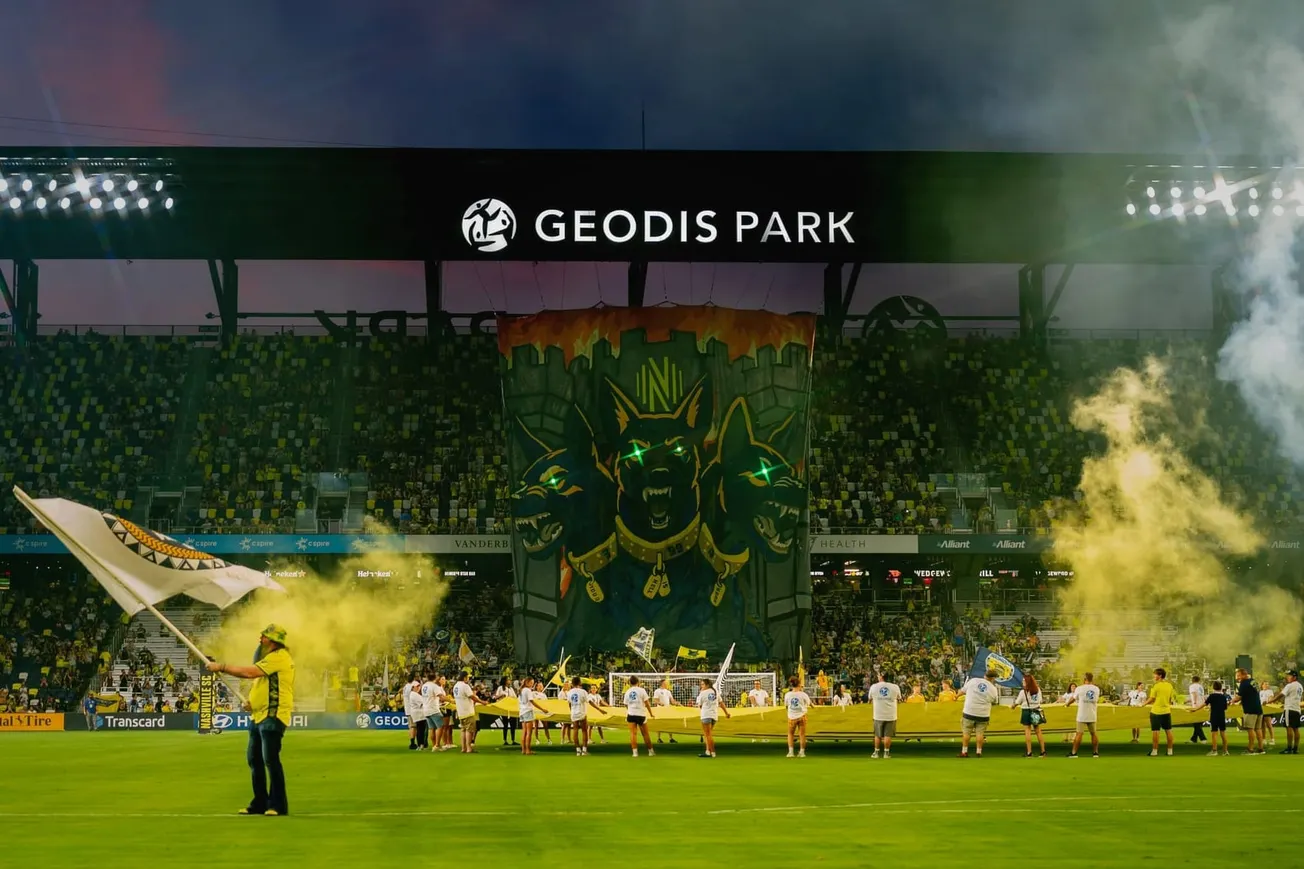
NASHVILLE, TN – If you've watched soccer for any period of time, you've almost certainly seen a tifo, large banners unfurled over the supporters' section before an important match, accompanied by drums, chants, and a healthy amount of smoke.
Nashville SC matches are no exception. The Backline, a collective of several independent supporters' groups, creates, designs, and hand-paints several tifos each season, providing iconic imagery to set the stage for some of the biggest matches of the season.
We went behind the scenes to learn about the process of making these iconic pieces of Nashville supporters' culture.
A brief history of tifos
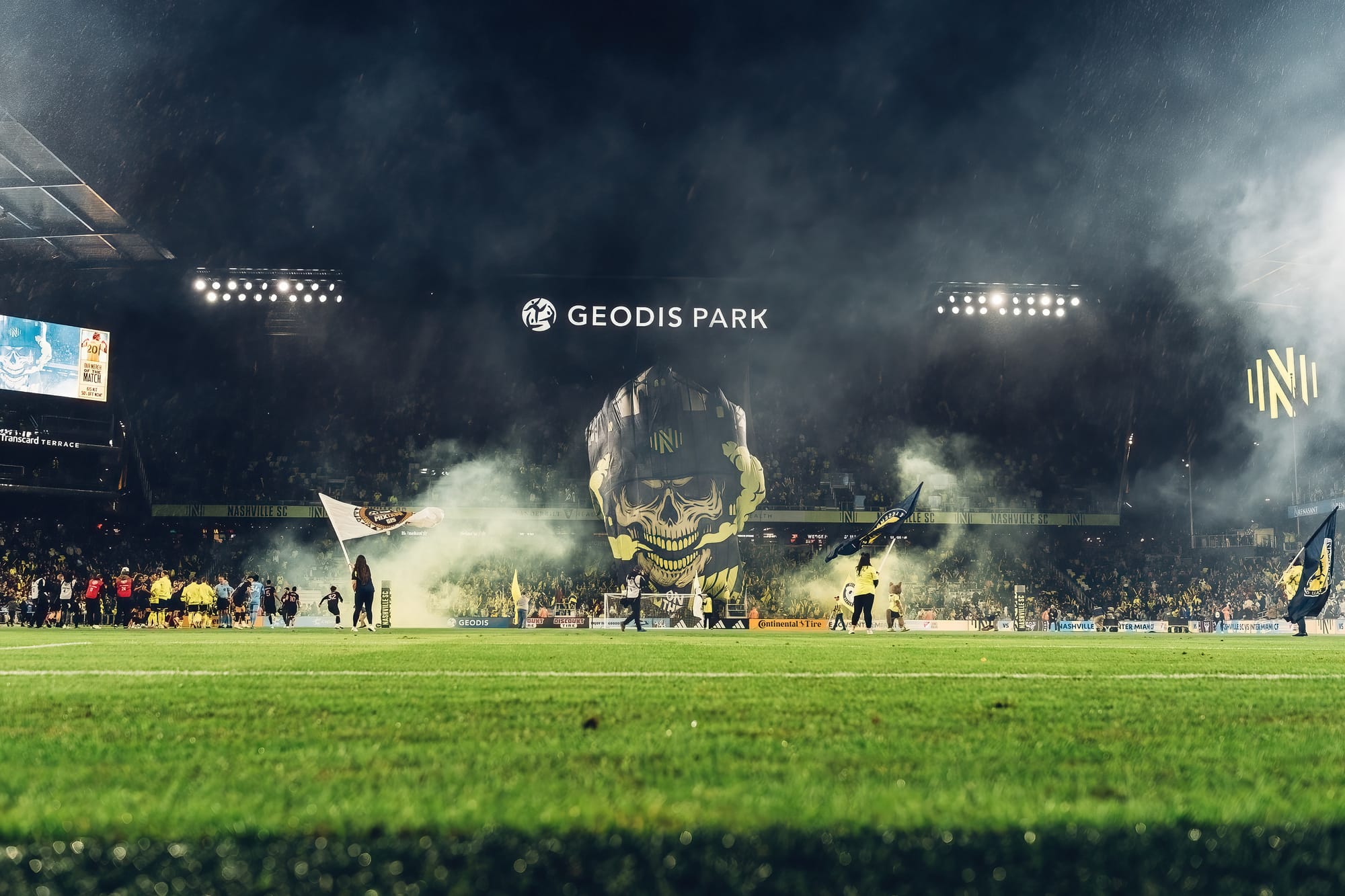
Tifos have been a highly visible part of soccer supporters' culture since the 1960s, when fans in Italy and later Eastern Europe began to develop coordinated visual displays in the supporters' section immediately before kickoffs for certain games, usually rivalry matches or other important fixtures. The term comes from the Italian word tifoso, referring to typhoid patients, and was co-opted to describe the feverish spread of fanatic football support.
In MLS, tifos are a widespread phenomenon, with fanbases like the Seattle Sounders, Portland Timbers, FC Cincinnati, and others often designing and unveiling their own displays. Nashville SC supporters have done their own versions, beginning with a Johnny Cash-inspired Tifo in their debut MLS match.
How do Nashville supporters make their tifos?
Tifos are on display for mere minutes, raised at the end of the national anthems and lowered before kickoff. That brevity contrasts sharply with the time it takes to create the tifos.
Before the season begins, the Backline – a collective of the official Nashville SC supporters' groups – votes on the matches at which they'll display a tifo, and then they get to work accepting submissions for designs, coordinating plans, and beginning the actual process of painting the tifos by hand.
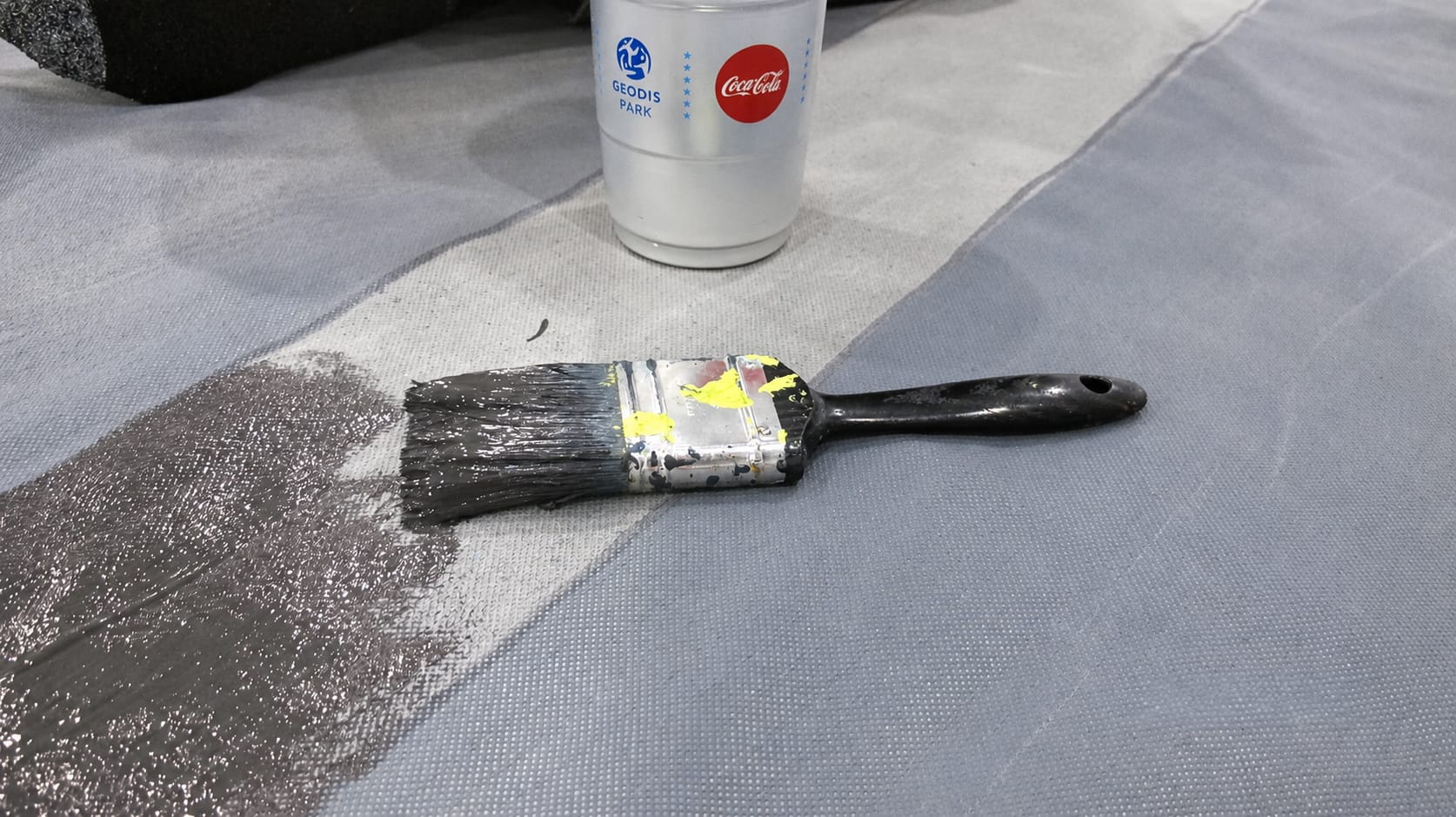
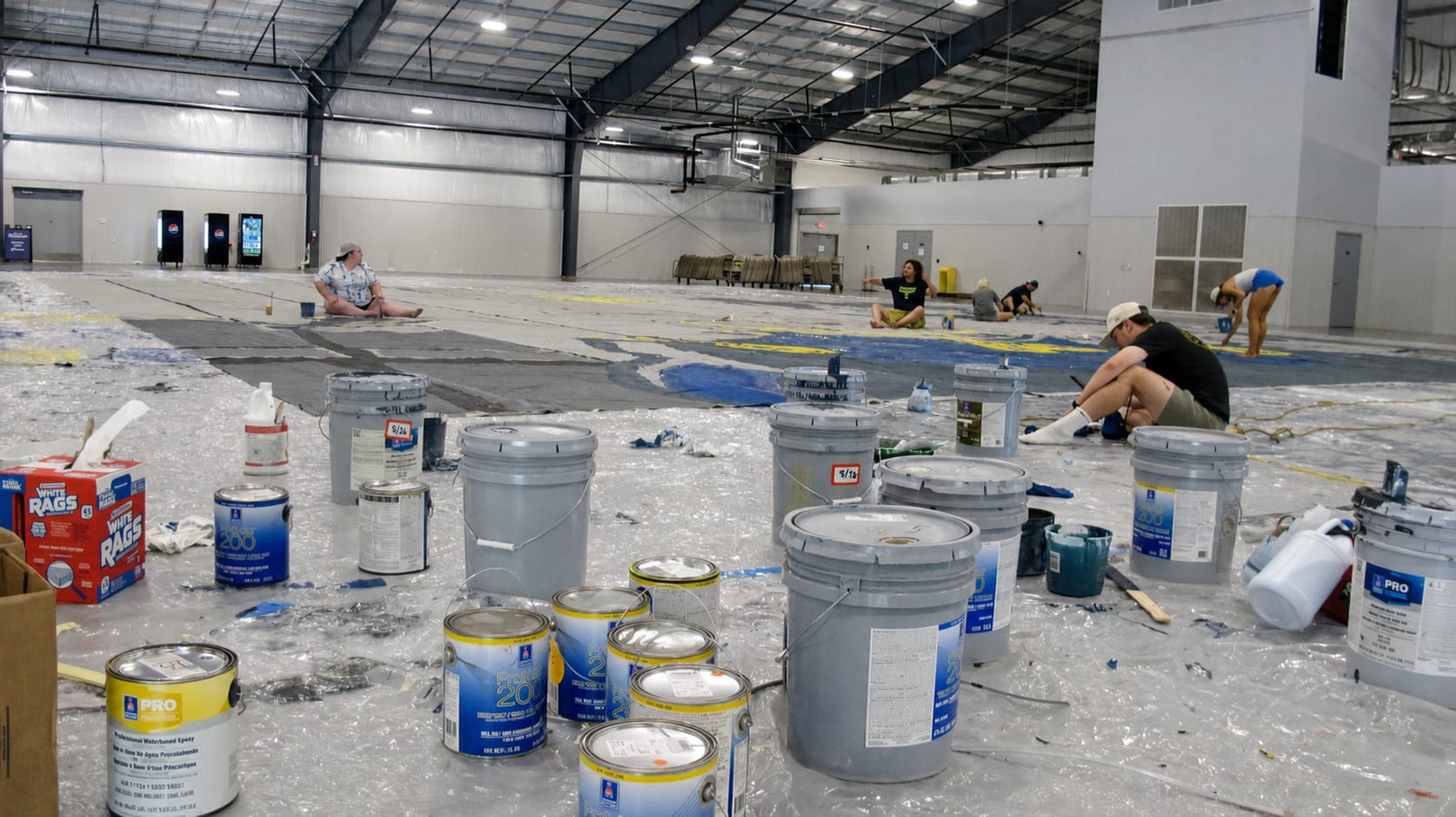
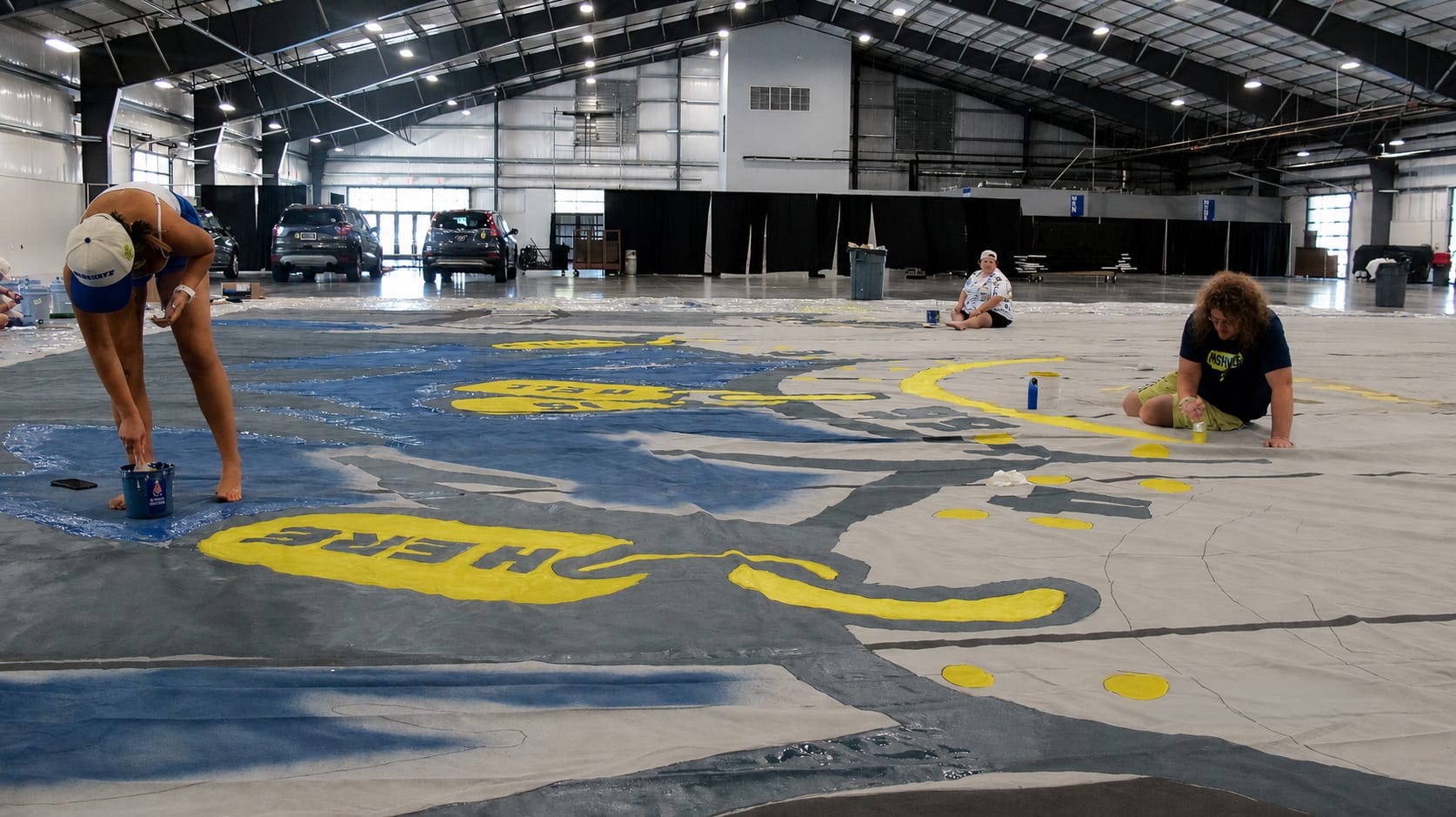
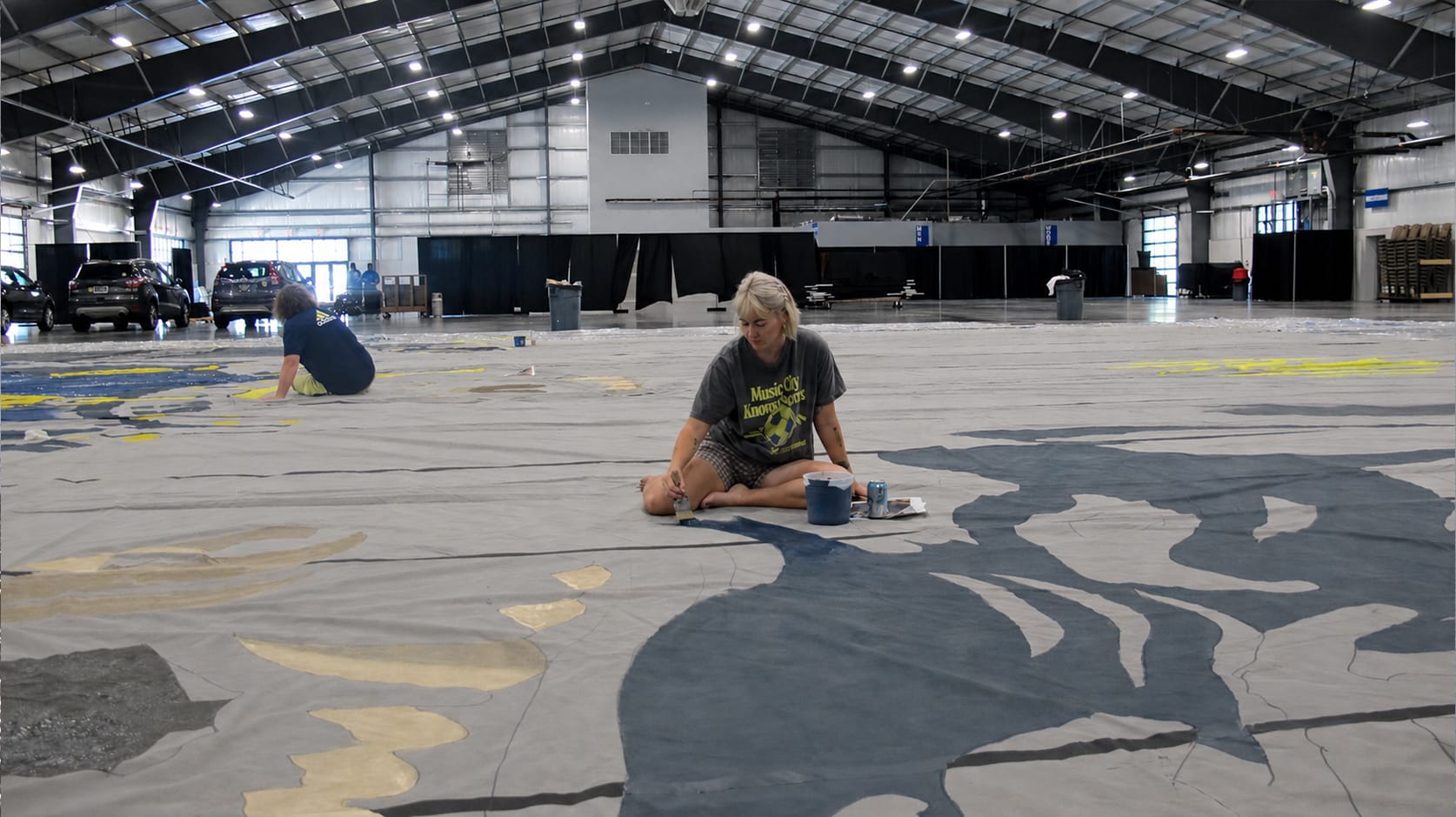
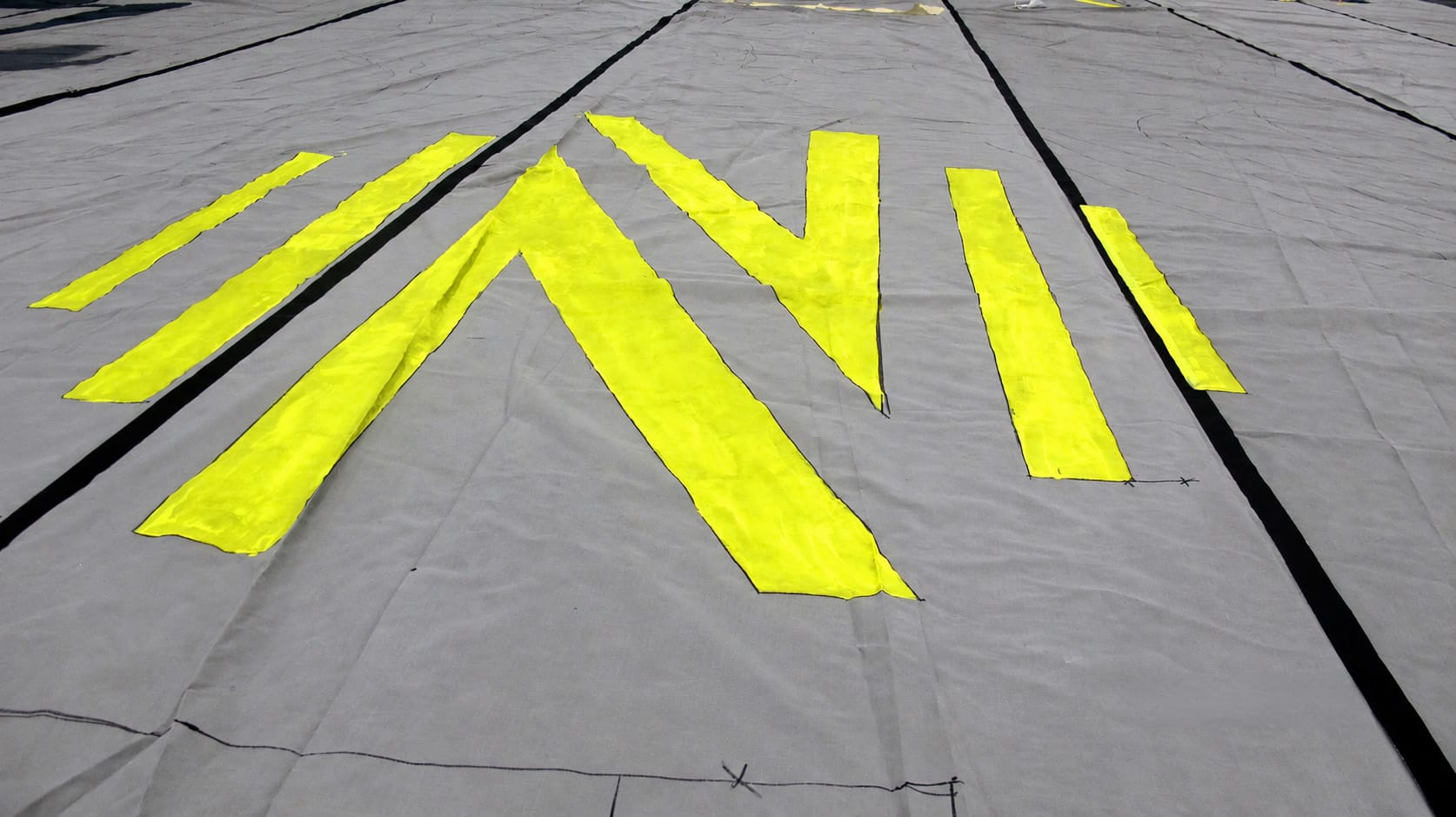
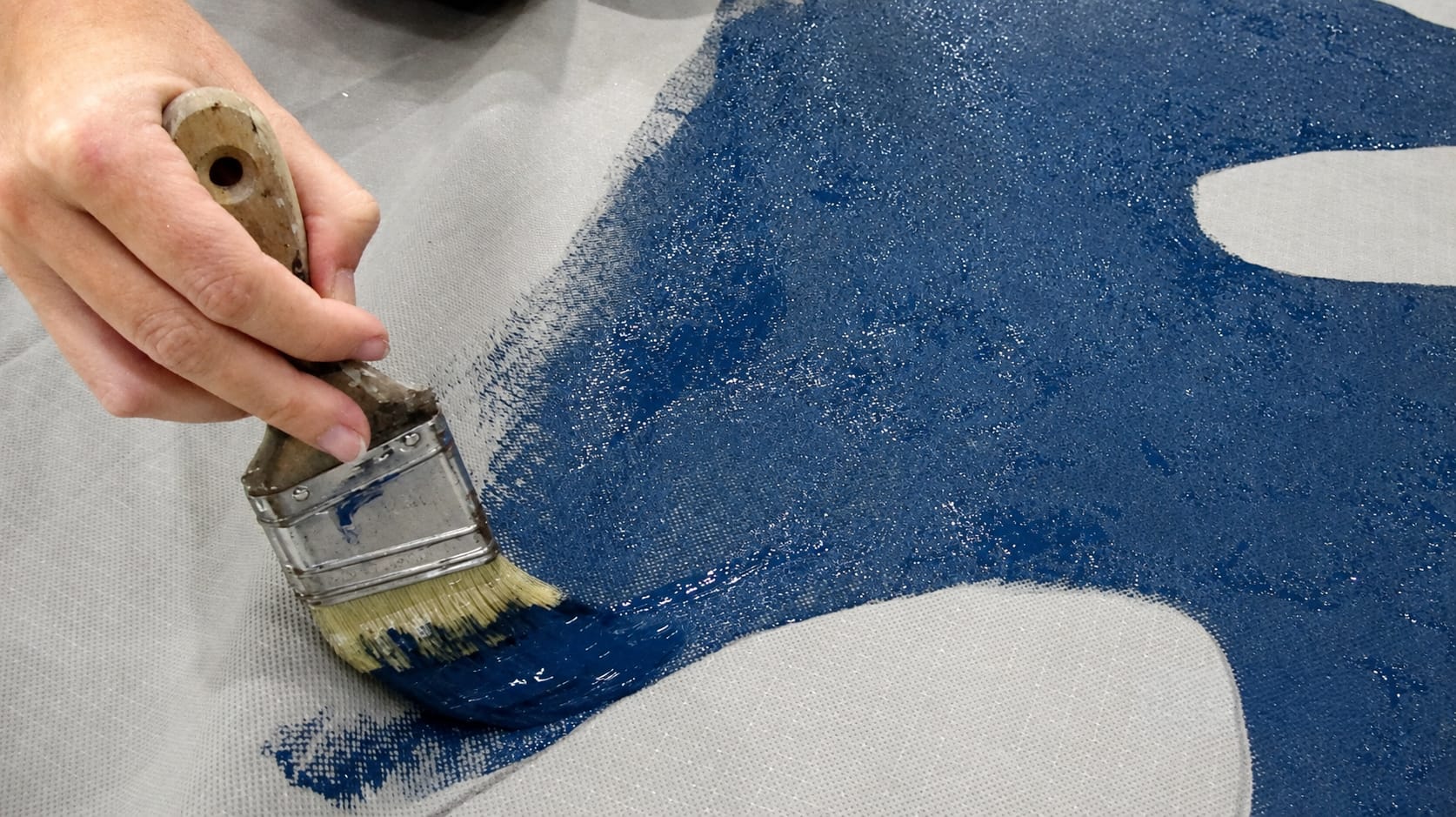
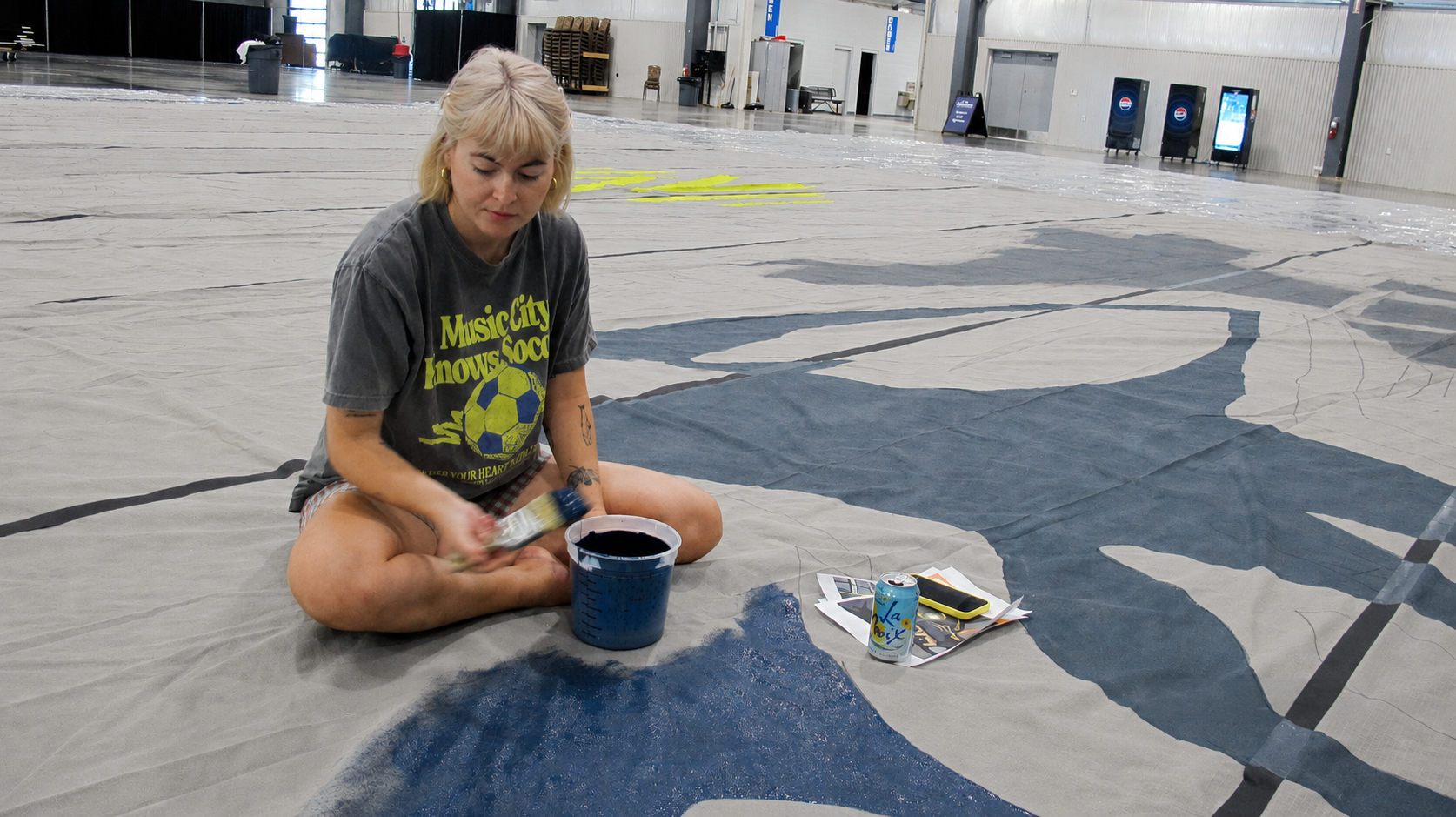
The Backline rents out space at the Nashville Fairgrounds, just across the street from Geodis Park. The actual canvas is made of weed barrier or landscaping fabric, held together with gaffer tape. The actual design is sketched out on the fabric before the painting begins.
Tabitha Spearman heads up the tifo committee for the Backline. She's in charge of fielding submissions from other supporters, finalizing the design, and getting the idea onto paper – and ultimately onto the canvas.
"I have a VR headset," she tells SixOneFive Soccer. "I import it into the headset, and then I walk around for four hours sketching the entire thing out by myself."
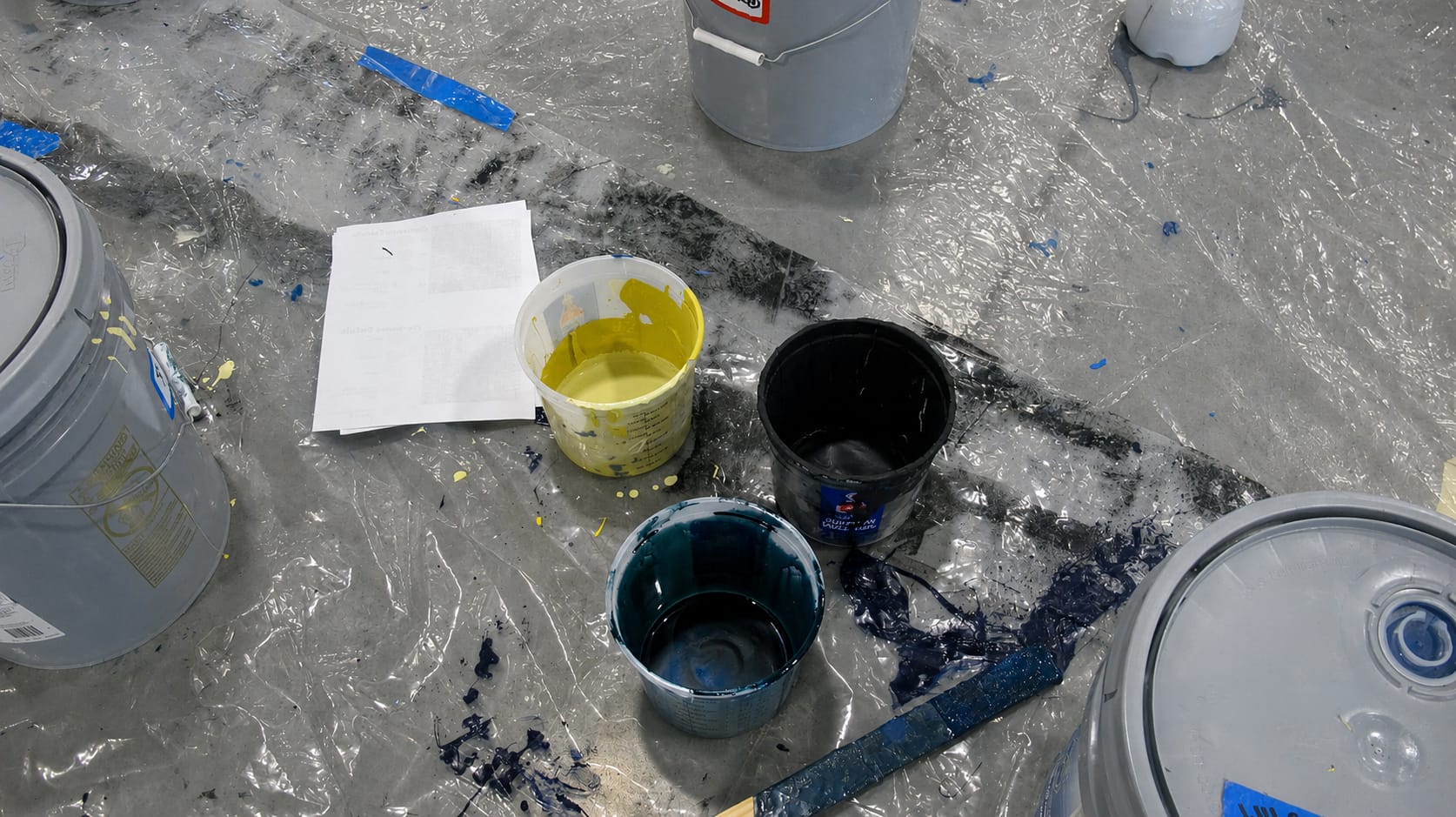
Once the design is sketched out, supporters come together and turn it into a reality. The canvas is divided into a grid, and anyone who volunteers to come and paint the tifo gets a portion of the grid, as well as paints and a picture of the final product. The process is essentially paint-by-numbers.
"It's a lot of man-hours. I would say in total, probably 200 man-hours," said Spearman. "I put in about 80 hours myself per tifo, and then we have five to six people here every day on top of me."
While it takes a lot of work to paint the tifos, the process itself is fun. In fact, many supporters view it as one of the highlights of the season.
"It's a lot of hours to put in for something that's only visible in the stadium for a few minutes, and I think that there's a reason that we put in all those hours," says Ashley Locke, the branding director for the Roadies supporters’ group. "Tifo painting is a great place to build the soccer community. For a lot of people, it's one of the only ways that they engage with the soccer community outside of attending games… It gives you an opportunity to have closer connections with people on the team, in soccer media, or just people who are attending these games."
Ben Wright-SixOneFive Soccer
Anyone can suggest an idea for a tifo. The most recent tifo, displayed ahead of Nashville’s 4-0 win over FC Cincinnati, showed a three-headed dog, representing Nashville’s defensive core of center backs Maxwell Woledzi and Jeisson Palacios, and goalkeeper Brian Schwake. The trio has contributed to the best defense in Major League Soccer so far in 2026.
"It came to me in a nightmare," laughs Spearman. "An actual nightmare. I woke up and said, 'Hey, guys, I had a dream about a Cerberus, and I think it should be our next tifo.'"
The Backline took the process even further, fitting the tifo with battery-powered lights to give the dogs' eyes an eerie, glowing effect.
How are the tifos actually raised?
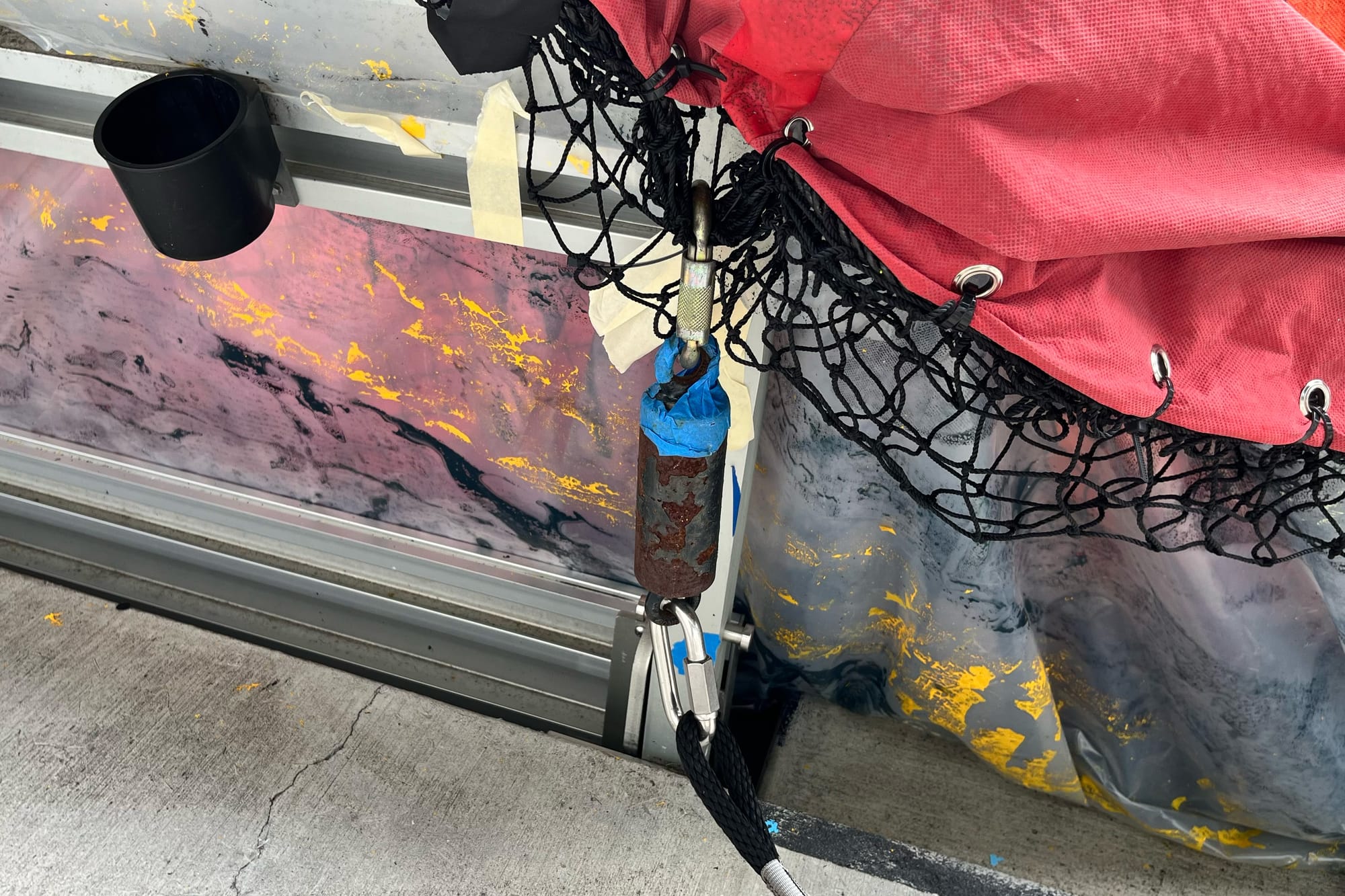
Once the painting process is finished (which usually takes at least two weeks), the tifo is carefully folded up and transported from the Nashville Fairgrounds to the Geodis Park supporters’ section, 0.3 miles away. The tifo is loaded in, staged, and tested the night before the match, with even more preparation taking place the day of the game.
Geodis Park is fitted with a specially designed pulley system, which raises the tifo up in front of the supporters’ section before the match. The actual size of the tifo is determined by this system, capped at a maximum of 60 feet wide to fit the pulleys, with past designs ranging as high as 80 feet tall.
Minutes before the game kicks off, while players enter the field for the pre-match anthems and festivities, the tifo is actually hoisted up, accompanied by chanting, drumming, and even some pyrotechnics from the supporters’ section. It generally goes off without a hitch, but Spearman can’t relax until the tifo is fully raised.
"It's always fun when it goes up. It's always nerve-wracking until it gets up there," she laughs. "It's all worth it, though. To be able to do that, to be in Geodis, to get photos and videos of it, even though it's only up for a minute every time, that's why I keep coming back, and I volunteer every time over and over and over again."
Soccer's unique supporters' culture
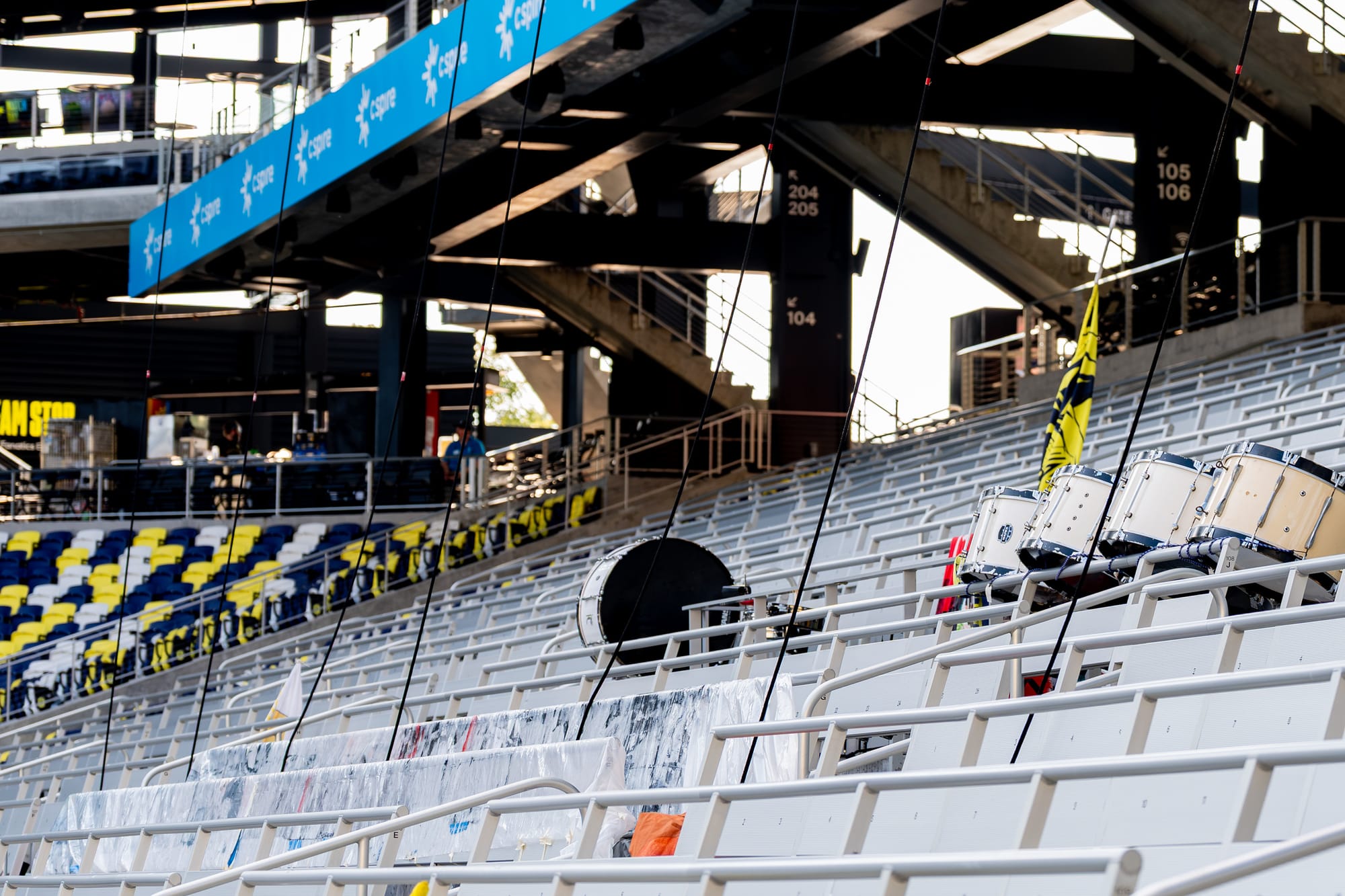
While every other sport has fans, soccer is unique in the way that fans are connected to the team. The organized singing and chanting they do throughout the game has become the soundtrack of the sport, turning stadiums like Geodis Park into incredible bastions of home-field advantage.
For the fans, though, game day activities tend to spill over into the rest of their lives, turning into deep and meaningful friendships that are much more far-reaching than simply soccer.
"Everything about this is giving people an escape from their day-to-day lives, to get to hang out with people who enjoy the same things as them, root for the same team as them, and be able to build connections in your city," said Locke. "Those kinds of things are what make people's experience living wherever they live more full and more rich and more fun. It's not even about the soccer itself, although that's what brings people together, but it's about the relationships that you get to build within your own life."